
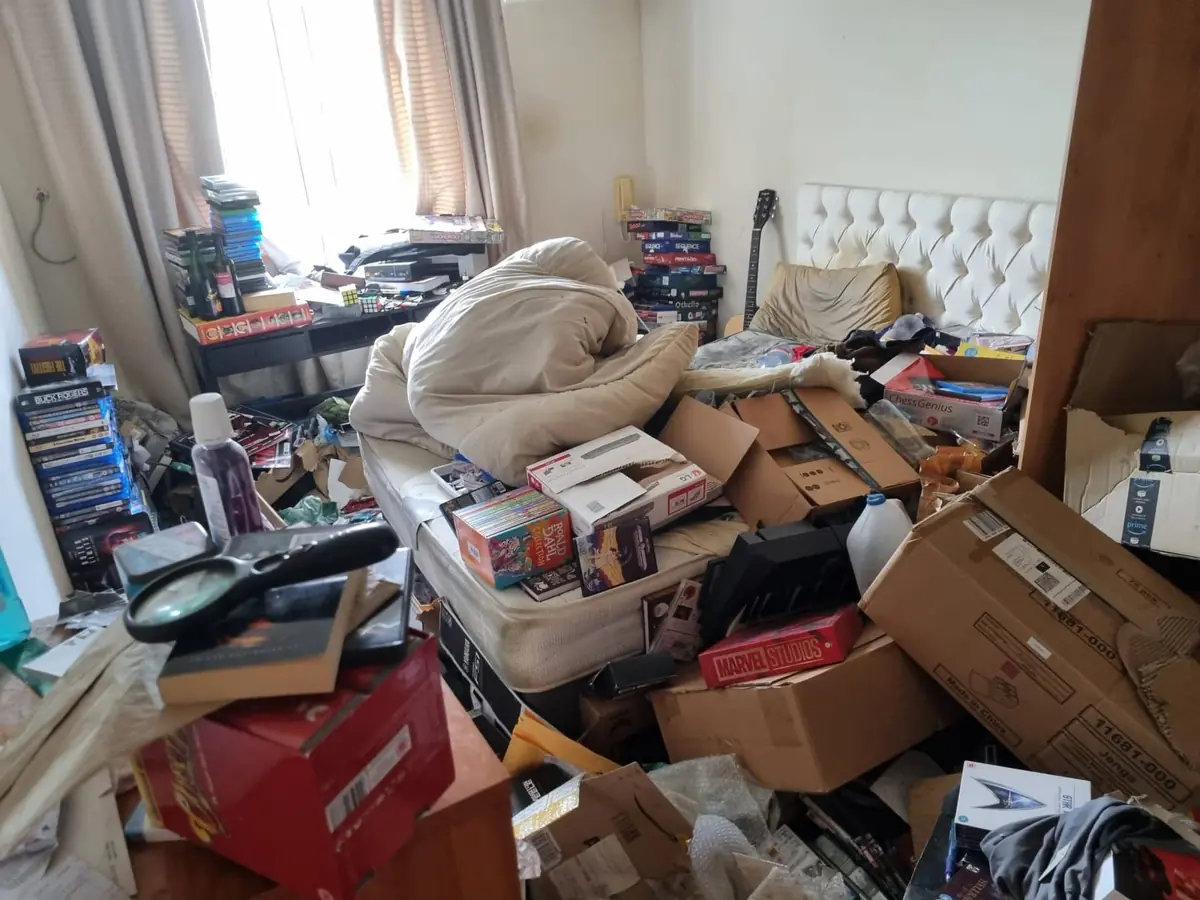
Before anything is moved: three questions
There is rarely a deadline that means you must start this week. Most pressure comes from outside: a buyer, a landlord, a solicitor, a sibling flying home. Settle three things first.
- Who decides? Usually the executor, or the administrator where there is no will. If the family disagree about the contents, settle it in writing first, because once items are loaded and sorted it may not be possible to get them back.
- Can the house be cleared yet? For ordinary household contents it usually can, but ask the solicitor first, especially where the contents may have value. We are not solicitors and this is not legal advice.
- Is there a date? A sale closing, a probate valuation, a lease ending. Tell any contractor the real date.
The one afternoon of sorting that matters
You do not need to sort the whole house. Sort the small things that cannot be replaced, and leave the rest as a job.
- Papers: the will, deeds, bank and insurance paperwork, certificates, passports, recent post.
- Family things: photographs, letters, diaries, medals, religious items.
- Money and jewellery: check coat pockets, handbags, books, tins, drawers and the hot press.
- Medicines: unused medicines go back to a pharmacy.
- Furniture someone wants: tag it or move it to one room.
Do it in short sessions, with someone with you, and stop when you are tired.
What Dublin City Council can help with
Clontarf is in the Dublin City Council area, which is the only one of Dublin’s four councils that runs a bulky household waste collection. Households can book online through Citizen Hub or on 01 222 2222 and pay in advance: €50 for up to five items, with each additional five items adding €50. A three-piece suite counts as three items. Furniture, bedding and mattresses, carpets, kitchen units, bathroom suites, doors and bicycles are among the items accepted.
The limits matter for a family home. You cannot choose the date, and collection may take up to ten days after payment (Monday to Friday, 8am to 3pm). Items must be on the public footpath on the morning, and nothing is collected from gardens, sheds or inside the house. Bagged household waste, garden waste, rubble, glass, gas cylinders, paint, batteries and electrical goods are not accepted, and it is for households only. It is a fair option for a few pieces. It does not empty a house.
The city’s three recycling centres (Ringsend, North Strand and Ballymun) take bulky items for a per-vehicle charge (for example €21 for a car and €28 for an estate or jeep), for householders’ own waste only, and refuse full large or commercial vans. North Strand is on the north side of the city, open Monday to Friday 10am to 4pm and Saturday 10am to 1pm. Council fees, opening days and rules change. The figures here are as we last checked them in October 2026, so confirm with the council or the centre before you travel.
What the clearance day looks like
A crew of two or three arrives with a box truck. We walk the house with you or with your list of what is staying, then work top-down: bedrooms and attic first, then downstairs, then garage, shed and garden. The house is swept through at the end.
You can stay, or be somewhere else. If we find something personal we did not expect, such as cash, letters or jewellery, we stop and ring you. If you cannot be there, we send photos of every room, and keys go back as agreed. Loads are held briefly in case something was missed, so ring us straight away if you think it was.
Where things go afterwards
The sort happens on the truck as each room is emptied, so it adds little time. Furniture and household goods in good condition are set aside for reuse where there is a realistic second life. We do not promise a destination for a particular item, because that depends on condition and demand that week. Metal and electricals (fridges, washing machines, TVs, cables) are separated as WEEE. Cardboard, paper, clean timber and textiles are kept apart. What is left goes to authorised waste facilities under our collection permit, No. NWCPO-25-13287-01. Disposal is charged by weight, so every kilo kept out of the general load lowers the cost.
Asbestos, chemicals, paints and solvents, oils, fuel, gas cylinders and clinical waste are on our not-accepted list, so tell us in advance if any are in the house.
The first weeks: a gentle order of things
This is not a legal checklist; your solicitor and the executor lead on that. It is the practical order in which families tell us the house work tends to go best.
The first days
- Make the house safe: secure doors and windows, turn off the water if the house will be empty, check the heating and the fridge.
- Find the will and the key papers and put them in one folder or box.
- Tell the people who need to know, in the way you choose.
- Do not clear anything yet.
The first weeks
- Speak to the solicitor about timing, probate and any valuation.
- Check the home insurance for any conditions on an unoccupied property, such as heating or visits. A vacant house often has conditions.
- Redirect post and keep a note of utility account numbers.
- Let the family see the house before anything is cleared, if they want to.
When you are ready
- Do the sorting afternoon described above.
- Send photos to a clearance company and get a fixed price in writing.
- Agree a date with the executor, and tell the family so nobody is surprised.
There is no virtue in being quick, and no shame in taking time. If a date is forced on you by a sale or a lease, that is the date to plan towards, and we will work to it.
Room by room, with care
Sorting goes better when you take one room at a time, and start with the room that matters least.
Kitchen and utility
Often the easiest. Keep a few things with a story (the teapot, the good plates). Empty the fridge and freezer, and switch them off a day ahead so they defrost.
Living room and dining room
Look through the sideboard and drawers, which hold photographs, cards and papers. Furniture that someone wants should be tagged or moved to one room.
Bedrooms and wardrobes
Clothes are often the hardest part. Many families keep one piece or one bag and let the rest go. Check pockets, shoeboxes, handbags and the top of the wardrobe. Jewellery boxes may not look like jewellery boxes.
The box room and the attic
Often the largest and least looked-at space, and the one people dread. Send photos and let the crew carry; you can be at the bottom of the stairs to say yes or no to a box. See attic clearance.
The garage, shed and garden
Tools, bikes and garden furniture, usually a family discussion. Group fuel, paint, oil and gas bottles, which we cannot take, and plan the council route for them. See garage clearance.
The bathroom and the medicine cabinet
Unused medicines go back to a pharmacy. Everything else is a straightforward clear.
When the family is spread out, or disagrees
Most of the calls we get are not from someone standing in the house. They come from a daughter in another county, a son abroad, a niece who is the executor. Some practical suggestions:
- Choose one person to instruct the clearance, usually the executor, and make sure everyone knows who that is.
- Put the kept list in writing. A shared message with photos of tagged items prevents arguments later.
- Use video calls for the walk-through if someone cannot be there. Showing a room on a phone is enough for them to say “yes, that one”.
- Set a deadline for claims. “Anything not claimed by the 15th goes” is kinder than an open-ended wait.
- Ask for photos afterwards. We send photos of every room when you are not there, so those who could not attend can see it done.
- If there is real disagreement, pause. Nothing is solved by loading a truck. The solicitor can help.
Using the council services as part of the plan
Part of a bereavement clearance can be done through the council and part cannot. A realistic split:
Dublin City Council’s bulky collection
Useful for a handful of pieces the family does not want. Book ahead (allow up to ten days), put items out on the footpath on the morning, and remember that three-piece suites count as three items. Not accepted: bagged waste, garden waste, rubble, glass, gas cylinders, paint, batteries and electrical goods.
The recycling centres
Ringsend, North Strand and Ballymun take recyclables, WEEE and batteries free, and bulky items with a per-vehicle charge. Household use only. North Strand is open Monday to Friday 10am to 4pm and Saturday 10am to 1pm; Ringsend and Ballymun are open Monday to Wednesday 9am to 5pm, Thursday and Friday 9am to 6pm, and Saturday 9am to 4pm.
The bring centres
Oscar Traynor Road in Coolock is the nearest bring centre to Clontarf that we list. It takes paper, cans, cardboard, plastics, textiles, batteries, light bulbs, glass, books, cooking oil and small WEEE (no bigger than a microwave), and charges for bagged green waste (€2 per bag). It takes household waste only, no furniture, and it is closed on bank holidays. It is open Monday to Thursday 9am to 4pm, Friday 9am to 1pm and Saturday 10am to 4pm. Payment is by coins, with exact change.
What this means in practice
A few families do the whole job in a month of Saturdays with these services. Most do the small personal things themselves, use the council for a couple of items, and book a crew for the lifting.
Council fees, opening days and rules change. The figures here are as we last checked them in October 2026, so confirm with the council or the centre before you travel.
Questions to ask any clearance company
- Do you have a waste collection permit, and what is the number? (Ours: NWCPO-25-13287-01.)
- Are you insured, including public liability?
- Is the price fixed, and what is in it?
- Can we give you a list of what is staying, and will you work to it?
- What do you do if you find cash, letters or jewellery?
- Will you send photos if we cannot be there?
- What will you not take?
- What if something goes by mistake?
Our answers: we hold a permit; we are fully insured; the price is fixed from photos; we work to a written kept list; we stop and ring you if we find something personal; we send photos of every room; and loads are held briefly in case something was missed.
Afterwards: the empty house
An empty house is its own kind of hard. A few practical things help:
- Keep our confirmation and invoice for the solicitor or estate agent; clearance is usually an expense of the estate.
- Cancel bins and utilities and redirect post.
- Check the attic, shed and garage once more.
- Tell the solicitor or estate agent that the property is cleared and swept.
- If the house is staying empty, keep the heating and insurance conditions in mind.
Some families walk through the empty house together at the end. If you would like a few minutes there before the keys go, say so, and we can plan the finish around it.
Handling sensitive things: clothes, letters, devices and medicines
Clothes
Clothes are often the hardest because they still hold a person. Many families keep one jacket, a scarf, or a favourite jumper and let the rest go. If you want to make something from the clothes, a memory cushion or a quilt, set aside what you need now. Good clothes can be offered to a charity shop; the rest is textile waste.
Letters, cards and diaries
Do not read them under pressure. Put handwritten material in a box and decide later. We will not throw out anything in an envelope or a diary unless the kept list says so.
Phones, tablets and computers
These may hold photographs, messages and accounts. Keep them together, and ask the executor before any are wiped or removed. Old devices that are not wanted are WEEE and are accepted free at the Dublin City recycling centres.
Medicines
Unused medicines go back to a pharmacy. Do not put them in the bin or in a clearance.
Documents with personal details
Bank statements, medical letters and old tax papers should be shredded after the executor has confirmed what is needed. Keep what the solicitor asks for. We do not offer shredding or data destruction.
Religious and keepsake items
Medals, statues, prayer books and memorial cards are best given to someone who will value them, or to a parish. Tell the crew what is in a box if it is not obvious.
Pets and plants
If a pet is still in the house, make arrangements before any clearance. Plants can be offered to neighbours or family.
Keeping the memory without keeping the house’s contents
Many families find it easier to let things go once they have found a way to keep the person. Some ideas, none of which needs money or special skill:
- A memory box with a few small objects, a handful of photographs and a handwritten note.
- Photographing the rooms before they are emptied, so the house is remembered as it was.
- A photograph of each item you are not keeping but want to remember.
- Recording the stories behind objects with whoever remembers them, on a phone, before the object goes.
- Dividing the small things among the family, one object each, chosen by the person it matters most to.
- A last cup of tea in the house with whoever wants to be there.
These are suggestions rather than rules. Some families want none of this and need the house empty by Friday, and that is entirely valid.
An empty or half-empty house: keys, security and insurance
- Keys: know how many sets exist and who has them. Agree with the executor who hands keys to the crew and who receives them back.
- Security during the job: the crew work with the front door open at times. Tell neighbours, and keep valuables out of the house on the day.
- Valuables: remove cash, jewellery, small antiques and documents before the day. If you cannot, tell the crew where they are.
- Insurance: a vacant property often has conditions about heating, visits and contents. Check the home insurance policy as soon as the house is empty or is going to be.
- Utilities: keep the electricity on for the day of the clearance, so the crew can see, and turn off water if the house will be empty.
- Post: redirect it, and collect from the door for a few weeks.
If the property is an apartment or flat, the management company may have rules for lift use, common areas and deliveries. See apartment clearance Dublin.
What to say on the first phone call
You do not need to explain or apologise. We hear from people at every stage, from the first week to a year after. A good first call has five parts, and you can say them in any order:
- The address, or at least the area, and the type of property.
- That it is a bereavement, and whether the executor is you or someone else.
- Your date, if there is one, or that there is none yet.
- Whether you will be there, and who the contact is if not.
- Anything you are worried about: a person who finds it hard, a family member who has not agreed, a room you cannot face.
We will tell you honestly if the job is a better fit for the council’s collection or a few trips to a recycling centre. Photos can come later, when you are ready.
What affects the quote
We do not publish prices. A quote follows the volume, the weight, access (stairs, parking, the distance to the truck), the mix of items and how much can be reused, and your date. Send photos of each room, the attic and any outbuildings, and a line about parking. We give you a fixed price in writing, with a note of what is being kept. For the general guide, read our bereavement clearance guide for Dublin.
Questions families in Clontarf ask
Can Dublin City Council collect a houseful of furniture?
Only up to five items per €50 collection, from the public footpath, on a date you cannot choose. It does not collect from inside a house.
Can the house be cleared before probate?
Usually for ordinary contents, but ask the solicitor first, particularly where contents may have value. We cannot give legal advice.
Do we have to be there?
No. We can work from a list and keys, ring you if something unexpected turns up, and send photos of every room.
What happens to things nobody wants?
Good items are set aside for reuse where possible, metal and electricals and paper and timber are separated, and the rest goes to authorised facilities under our permit.
Are you a permitted carrier?
Yes. Krystal Klean Express Limited holds Waste Collection Permit No. NWCPO-25-13287-01.
Does Dublin City Council collect furniture from inside the house?
No. Items must be on the public footpath on the morning of collection. Nothing is collected from gardens, sheds or inside.
How long can a bulky collection take?
Collection may take up to ten days after payment, and you cannot choose the date.
What if the family disagree about the contents?
Settle it in writing before anything is cleared. Once items are loaded and sorted it may not be possible to get them back.
Who pays for the clearance?
Usually the estate, through the executor. Keep the invoice for the solicitor.
Can you start early or work around an event?
We work Monday to Saturday, 8am to 5pm (not Sundays), and will plan around a funeral month’s mind, a family viewing or a deadline if you tell us.
What our customers say
Genuine reviews of our clearance crew on Google, quoted as written; dates as shown on Google in October 2026.
★★★★★4 months agoCiprian and Brian and Willie were great. They cleared out our mom’s house after she passed away last year. Professional, organized, empathetic and resourceful. It was a job we were dreading but they did it quickly with no fuss. I’ve never made an effort to make a recommendation online but Ciprian exceeded expectations.
★★★★★5 months agoWe got Ciprian in to do a bereavement house clearance and I couldn't recommend him higher. They made what was really a difficult experience for us so much easier and Ciprian was a gentleman throughout and very understanding of what we were going through. Also it was very refreshing these days to see someone operating his business in a very transparent and honest way and the job they did was top class and left the house spotless afterwards.
Ready to get a price?
The service this guide supports is Bereavement clearance Dublin, with the areas we cover and the local council facts. Or skip straight to a quote.
Related pages
- Bereavement house clearance guide (Dublin)
- House clearance Dublin
- Attic clearance Dublin
- House clearance in Malahide when downsizingDownsizing from a larger Malahide home: how a partial clearance works, what to keep, sell or donate, how reuse lowers the cost, and what Fingal’s recycling centres charge.