
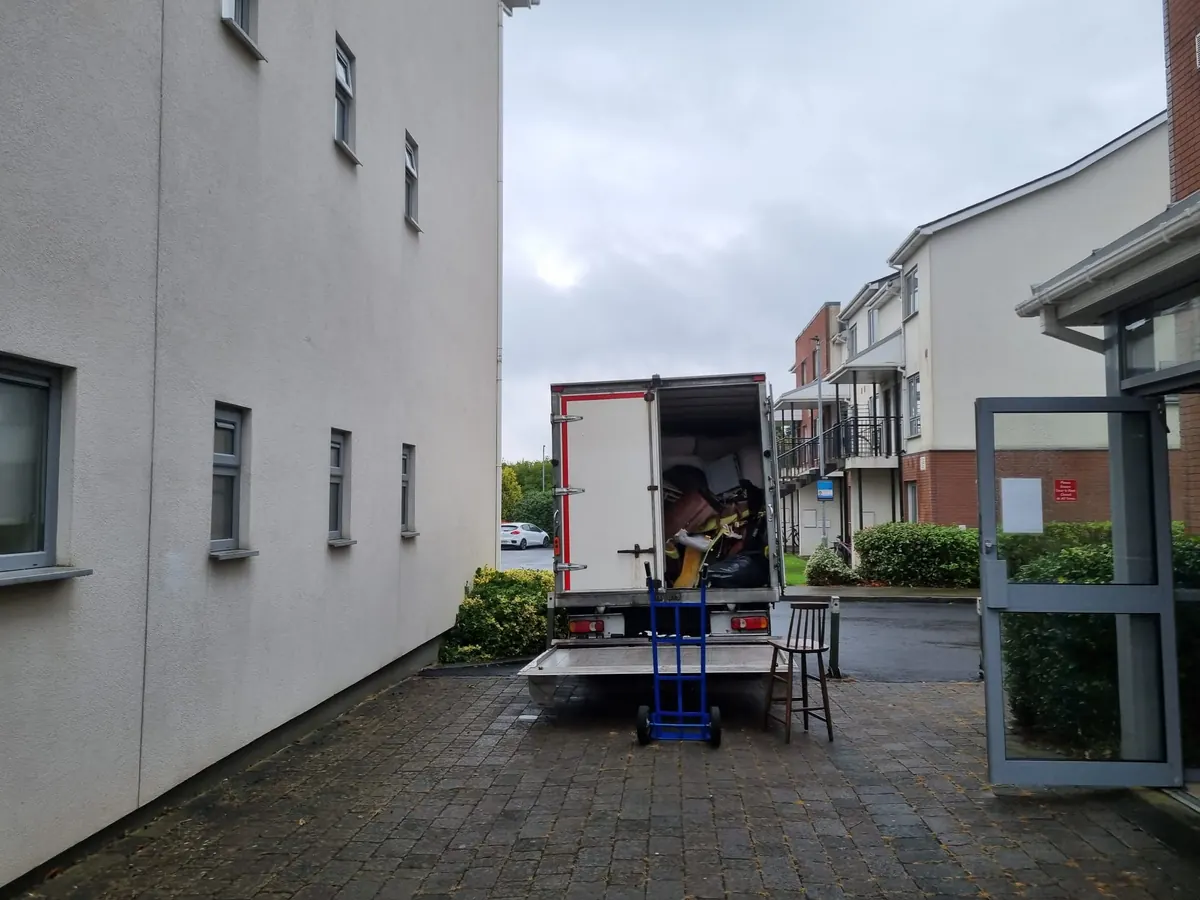
The summer window, and why it is tight
Student tenancies around DCU tend to end together, usually from late May into June, with the next intake arriving in September. For a landlord with one house that is a job; for an agent with a dozen units across Drumcondra and Glasnevin it is a season. Every unit has to be cleared, repaired, cleaned and photographed before the next group signs, and the cleaners and painters cannot start until the clearance is done.
The stock is mixed: Drumcondra’s older redbrick terraces, many long since divided into flats or let by the room, and the purpose-built blocks and semi-detached houses around Glasnevin let whole to groups. A block with a lift, a management company and a bin store is an apartment clearance; a converted house with a shared hall and a steep stair is a flat clearance. Both turn up in the same summer, so treat the whole portfolio as one piece of planning rather than a dozen small emergencies.
What student tenants typically leave behind
Some of it would not fit in a car to Cork or on a flight home; some was bought for the year and never meant to last longer.
- Mattresses and bedding. Often one per room. Bulky, and charged at council sites; see mattress disposal Dublin.
- Desks, chairs and flat-pack shelving. Cheap flat-pack rarely survives a move and is left assembled. Light, but awkward on a stair.
- Bikes. In the hall, the yard or chained to a railing. Decide who owns each one before the day.
- Kitchenware and small appliances. Pots, plates, kettles, toasters, a fridge full of condiments. Small electricals are WEEE; see fridge disposal Dublin for the fridge.
- Textbooks, notes and printers. Heavy. Paper is a separate stream; books in good condition are a reuse candidate.
- Clothes, hangers and bags of laundry. Textiles are bagged separately.
- Bags of general rubbish, often left in the yard in the last week.
- The landlord’s own furniture, damaged. A broken bed slat, a stained sofa, a wardrobe door off its hinge.
Anything of real value, or anything the tenant could sell, is rarely left. What remains is bulk and weight, which is what a clearance crew is for.
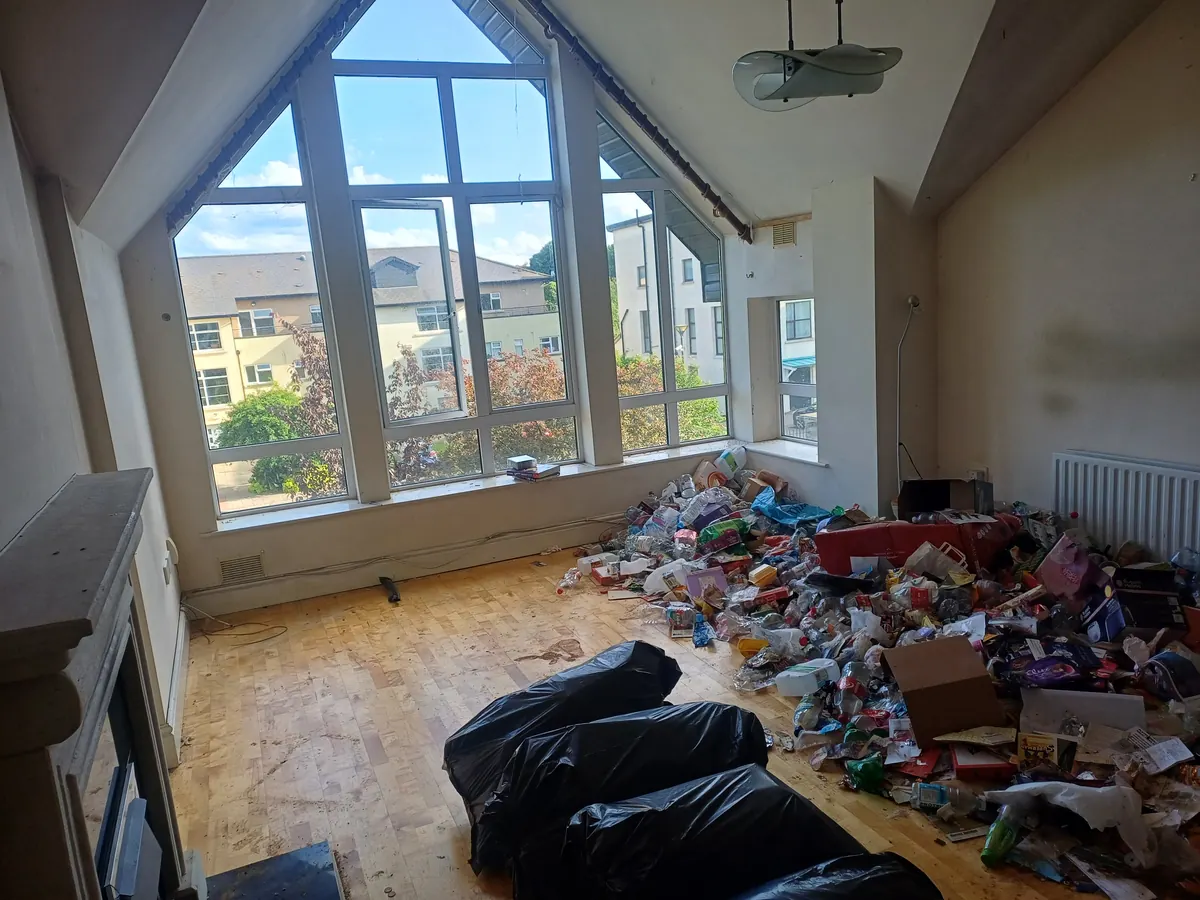
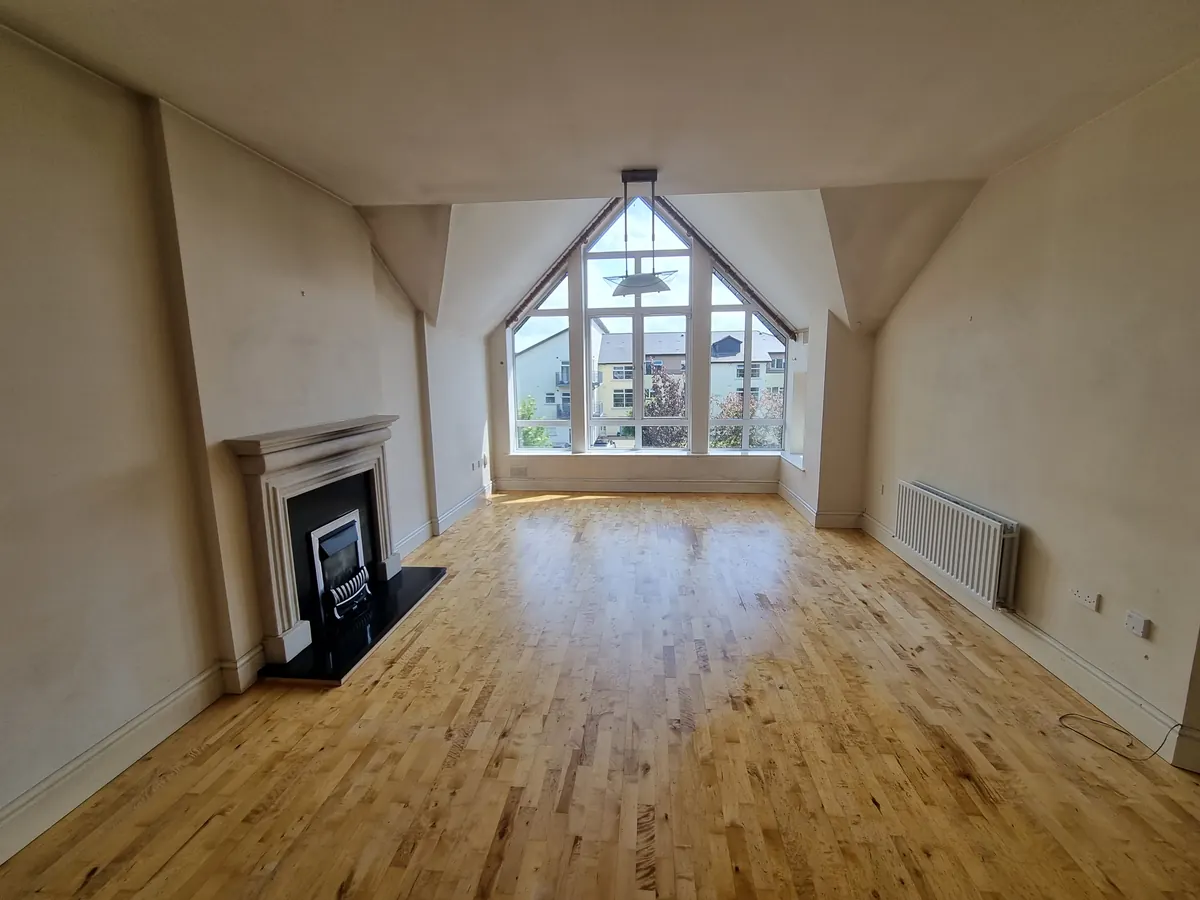
Real job: an apartment living room before and after a clearance. Loose rubbish is bagged on site before anything is carried out.
Whose things are they? Settle that before anyone lifts
A clearance crew works to instruction and does not decide who owns an item. For a student let, the landlord or the agent decides, in writing, what goes.
- Photograph every room as the tenants left it, before anything is moved. It is your record for the deposit and the basis of our quote.
- Check your own tenancy agreement and process for belongings left behind. We cannot advise on notice periods or on what the rules require; that is between you, the tenant and the RTB rules, so ask your own adviser if in doubt. Once your process is complete, we clear and photograph everything.
- Tag what is staying. The landlord’s beds, wardrobes, table and white goods: a strip of tape and a word on it. In a part-furnished let, the line between yours and the tenant’s is not obvious to someone walking in for the first time.
Bikes are the usual grey area. In a managed block, bikes in the bike store are the management company’s call; elsewhere, photograph them, ask, and if nobody claims them in time, add them to the list.
Booking several units as one job
If you have more than one property turning over, tell us about all of them at once. Agents and landlords with a block of units book the lot, and we invoice per unit so each cost lands in the right file. What makes a multi-unit booking work:
- A list of addresses, with the floor, whether there is a lift, and how the crew gets in (keys, a key safe, an agent on site).
- Photos of every room in every unit, named by address. Fifteen plain phone photos tell us more than a paragraph.
- What is staying in each unit, as a short line: “beds and wardrobes stay, everything else goes.”
- The order you need them in, and your real deadline for each.
Several small flats close together can be planned as one run, which keeps the truck in the area. A crew of two or three with a box truck works through them in order, sorting the load as it goes. Houses let whole to five or six students are a bigger job, so photograph the yard, the shed and the attic hatch as well as the rooms. We work Monday to Saturday, 8am to 5pm, and not on Sundays.
Parking and access on terraced streets and in blocks
The houses in Drumcondra and the older parts of Glasnevin are mostly on streets with on-street parking and no driveway, often with a back lane. A box truck needs somewhere close, level and legal to stand, so tell us the real situation: whether residents’ parking applies, whether a space can be held with a car that moves out at the right moment, and whether the lane is usable or gated. A truck standing several doors away means a longer carry and a longer job, which is fine as long as we know in advance. Our access and parking guide lists what to photograph.
In a purpose-built block the questions are the lift and whether it needs to be booked or padded, how long a vehicle may stand in the loading bay or courtyard, the door fob or code, and the rules on moving hours. Management agents usually want our insurance on file before the day; send us their details and we deal with them. Almost every management company bans bulky items from the bin store and charges the owner for removing anything dumped there, so everything loads straight onto the truck. In a converted house, the shared hall and the stair are the whole access story.
What can realistically be reused
Disposal is charged by weight, so anything with a second life is worth separating. Student leftovers are better than most for reuse in a few categories and worse in others.
| Item | Realistic outcome |
|---|---|
| Solid desks, chairs and bookcases in good condition | Set aside for reuse where there is a realistic second life |
| Flat-pack furniture | Rarely survives disassembly; usually timber and metal streams |
| Mattresses | General stream; hygiene rules out reuse |
| Kettles, toasters, microwaves, lamps, printers | WEEE, kept out of the general load |
| Textbooks and paperbacks in good condition | Reuse candidate; damaged books go as paper |
| Pots, pans and crockery | Usable sets are set aside; chipped crockery is general waste |
| Clothes and bedding | Textiles, bagged separately |
| Bikes | Reuse if sound and unclaimed; otherwise the metal stream |
We do not promise a destination for a particular item, because that depends on condition and demand that week. The simplest way to improve reuse is to tell outgoing tenants in May where to leave good items and what to bag as rubbish.
The small things we do not take, and the council route for them
In a student let these are the half can of paint under the stairs, the patio-heater cylinder, white spirit and oven cleaner under the sink, and a drawer of batteries. We do not accept paint, solvents, oils, fuel, chemicals or gas cylinders in any quantity, or asbestos or clinical waste. Set them aside, tell us about them in the quote, and use the council route. Drumcondra and Glasnevin are in the Dublin City Council area; as we last checked, this is what it offers.
The two council recycling centres on the north side of the city are Ballymun (Carton Way, Dublin 11), open Monday to Wednesday 9am to 5pm, Thursday and Friday 9am to 6pm and Saturday 9am to 4pm, and North Strand (Shamrock Terrace, Dublin 1), open Monday to Friday 10am to 4pm and Saturday 10am to 1pm; both close on Sundays. Entry is charged by vehicle: €21 for a car, €28 for an estate car, jeep or SUV, €55 for a car with a single-axle trailer and €95 for a van, with recyclables, household WEEE and batteries free. They take household hazardous waste such as paints, aerosols and pesticides, propane and butane cylinders, and waste engine and cooking oil, each for a charge. They are for householders’ own waste, and refuse commercial waste and full large or commercial vans.
One caution: the centres are for householders’ own waste, so a van load gathered from several properties may be treated as commercial and turned away. Check at the gate before you load. Council fees, opening days and rules change. The figures here are as we last checked them, October 2026 (council data checked on 6 October 2026), so confirm with the council or the centre before you travel.
A turnover sequence that works
- Before the tenants leave: message the group about what to take, what to bag and where to leave good items. Arrange the key return.
- The day the keys come back: photograph every room, the yard, the hall and any shed.
- That week: send the photos, the addresses, what stays and the order. You get a fixed written price per unit and a date.
- Before the clearance: set aside paint, chemicals and cylinders; defrost fridges; clear the stair; book the lift or tell the management company.
- Clearance day: a crew of two or three with a box truck empties each unit, sorts the load and sweeps through. You need not be there if keys are arranged; we send photos of every room and an invoice per unit.
- The day after: cleaners, then repairs and painting, then the photographs for the listing.
A clearance leaves a unit empty and swept, not cleaned. See the end of tenancy clearance page for the handover side when a tenant is still in the picture.
What affects the quote for a student let
We do not publish prices. A quote follows the volume across the units, the weight, the access (floor, lift or stairs, where the truck stands), the mix of items and how much can be reused, and your dates. We are based in Athy and run into Dublin daily, and Dublin work is scheduled in rounds, so the quote carries no long-distance premium. Send photos through the quote form or on WhatsApp and you will have a fixed price in writing for each unit.
Questions landlords and agents in Drumcondra and Glasnevin ask
Can you clear several student flats in one visit?
Yes. Agents and landlords with a block of units book the lot, and we invoice per unit. Send the addresses, the photos for each and the order you need them in.
Do you clear the landlord’s furniture or just the tenants’ leftovers?
Whatever you instruct in writing. Tag what is staying, or move it to one room, and we take the rest. Photographs of each room before and after are sent to you.
What happens to belongings the tenants left behind?
We cannot advise on the process for abandoned goods; that is between you, the tenant and the RTB rules. Once your process is done, we clear and photograph everything. Items in good condition are set aside for reuse where there is a realistic second life.
Do you deal with the management company?
Yes. Send us the agent’s details and we arrange the lift booking, protective covers and insurance on file before the day.
Can mattresses go in the bin store?
No. Almost every management company bans bulky items from bin stores and charges the owner for removing them. Everything loads straight onto the truck.
Do you take the half-used paint and the gas cylinder from the patio heater?
No, in any quantity. Dublin City Council’s recycling centres at Ballymun and North Strand take household paint and propane or butane cylinders for a charge, as we last checked.
Does Dublin City Council collect furniture from a rented house?
Its bulky household waste collection is for households: €50 for up to five items, paid in advance, collected from the public footpath on a date you cannot choose. It does not collect from inside a property.
Can you work early or on a Saturday?
We work Monday to Saturday, 8am to 5pm, and not on Sundays. Early slots and Saturdays may be possible; ask when you book.
Does someone from the agency need to be on site?
Someone to give access is enough, or a key arrangement. We ring the contact if anything unexpected turns up and send photos of every room afterwards.
What should we tell outgoing tenants to make the clearance cheaper?
Ask them to bag rubbish, leave good items together in one room, take their bikes, and empty the fridge. Less general waste means less weight, and disposal is charged by weight.
What our customers say
Genuine reviews of our clearance crew on Google, quoted as written; dates as shown on Google in October 2026.
★★★★★3 months agoCiprian and his team were so sympathetic and efficient when I contacted them to help clear out the apartment after a bereavement. The came and were very respectful in clearing completely everything, rubbish, books, clothes, kitchen, living room, bedroom in the apartment and left it spotless. The clearence took a lot of stress off me. I highly recommend them.
★★★★★3 months agoCiprian and the team did a fantastic job clearing our full house plus our shed in a day and a half. They were very professional, clean and so quick. I highly recommend these guys.
Ready to get a price?
The service this guide supports is Apartment clearance Dublin, with the areas we cover and the local council facts. Or skip straight to a quote.
Related pages
- End of tenancy clearance Dublin
- Flat clearance Dublin
- Mattress disposal Dublin
- Fridge disposal Dublin
- House clearance guide (Dublin)
- House clearance in Blanchardstown: landlords, tenants and sellersClearing a Blanchardstown house or apartment before a handover: planning the date, Coolmine recycling centre rules and fees, apartment management rules, and what a crew does.
- House clearance in Howth: planning around access, steps and parkingClearing a house in Howth is mostly a question of access: steps, long carries, parking and shared drives. How to plan it, what to photograph, and how the load is sorted.