
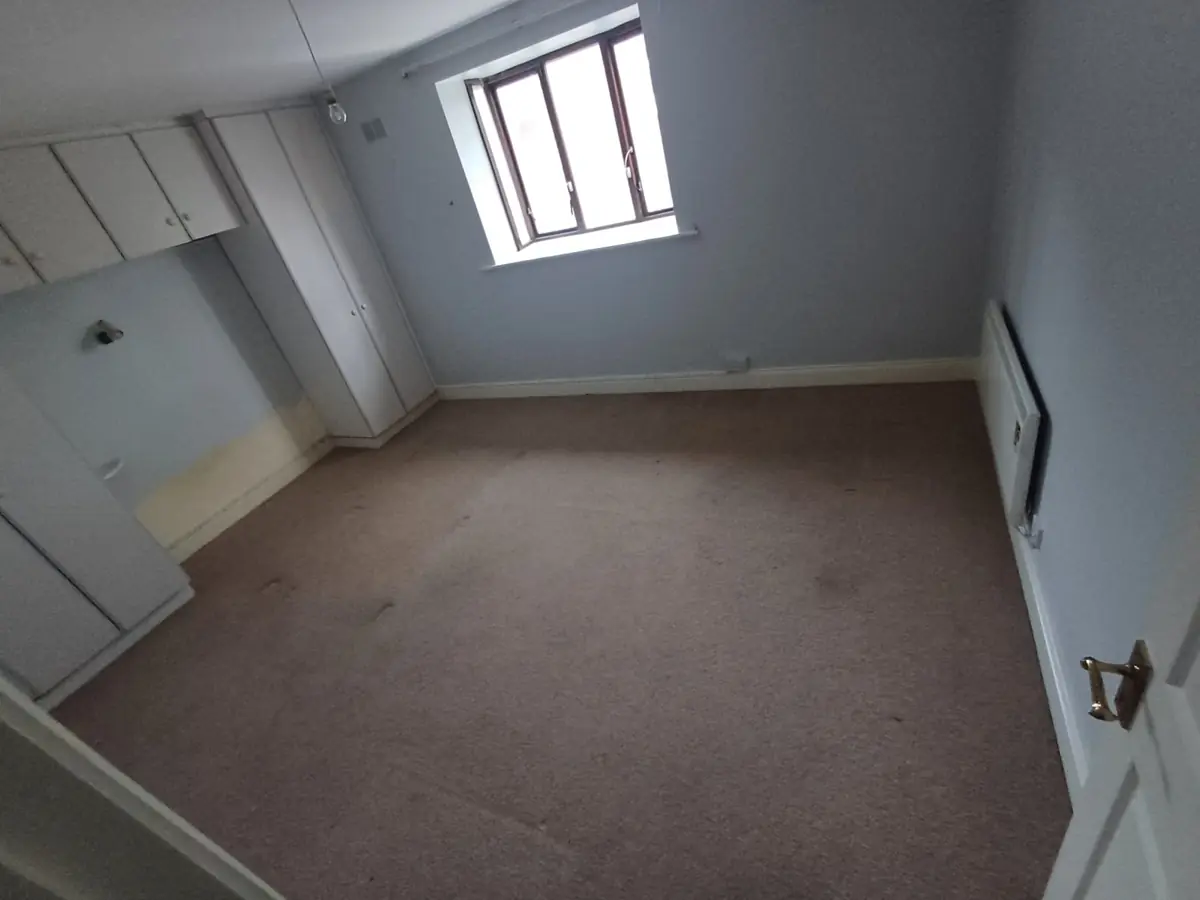
Empty, partly furnished or left alone: the decision first
Before any clearance, decide how the house will be presented. The three choices have different consequences.
| Empty | Partly furnished | As it is | |
|---|---|---|---|
| What it means | Everything removed, floors and walls visible | Selected pieces left to show the rooms | The house is lived in or full |
| Clearance needed | Full | Partial, with a tagged list | Perhaps only the attic, garage and clutter |
| Useful when | The owner has gone, the house is inherited, or repairs are planned | The owner is still living there and wants to declutter | The sale is quick and the house is tidy |
| Watch out for | Echoes, marks on walls, an unlived-in feel | Deciding what stays and tagging it clearly | Clutter hiding the size of rooms |
Ask the estate agent what they recommend for your house and what their buyers expect. They may have a view, and it costs nothing to ask. We do not advise on sale strategy; we do the lifting, the sorting and the disposal.
The order of work between “we’re selling” and the first viewing
Doing things in the wrong order costs time and money. This is the sequence that works best.
- Speak to the estate agent and solicitor. Establish what is included in the sale (fixtures and fittings), and what condition the property should be in.
- Decide what is coming with you or going to family. Remove it first, or tag it clearly.
- Clear. The clearance comes before painting, repairs or cleaning, because everything else is easier in an empty room.
- Repair and redecorate if you are doing it. Fill holes, repaint marked walls, fix doors and windows.
- Clean. A professional clean after the repairs, not before.
- Garden and exterior. Cut back, tidy and clear anything left outside.
- Photograph and view. The agent photographs a clean, finished house.
Allow a day between each stage, particularly between the clearance and the cleaners. A clearance that finishes the evening before the photographer arrives leaves no margin.
Fixtures, fittings and what stays with the house
One of the most common disputes in a sale is over what was supposed to stay. Settle it in writing before the clearance, because we take away what you tell us is going.
- Fixtures, which are normally part of the house: fitted wardrobes, built-in kitchen units, bathroom suites, light fittings, radiators, curtain rails.
- Items that may or may not be included: appliances, curtains and blinds, carpets, garden sheds, greenhouses, mirrors fixed to walls.
- Items that are clearly yours: loose furniture, pictures, rugs, ornaments, clothes.
Ask the solicitor how the contract describes the contents, and get the list in writing. Fixtures that belong to the property stay unless the sale agreement says otherwise. We do not take down fixed items unless that is part of the agreed job.
Room by room, with the sale in mind
Hall and stairs
Clear coats, shoes and boxes. Photograph the stairs and the turns, because they affect how furniture comes out. Scuffs on walls may need repainting after the clearance.
Living and dining rooms
The largest pieces are here. Decide what is staying with the sale, if anything. Check inside sideboards, under cushions and behind pictures.
Kitchen
Empty the presses and the fridge and freezer. Defrost a day ahead. Decide whether appliances are included in the sale.
Bedrooms
Wardrobes, chests, beds and mattresses. Check under beds and the tops of wardrobes. Built-in wardrobes are normally part of the house.
Bathrooms
Medicines go to a pharmacy. Cleaning products, aerosols and chemicals need a separate route, because we do not accept chemicals.
Attic
Often a surprise to the buyer’s surveyor. Clear it so that it can be viewed. See attic clearance.
Garage and shed
Frequently the largest unplanned job. Photograph both. Paint, solvents, oils, fuel and gas cylinders are not accepted; see the council route below. See garage clearance.
Garden
Garden furniture, tools, pots, compost bins and cuttings. Green waste is charged separately at council sites.
What a clearance reveals, and what to do about it
An empty room shows things a full one hides. Be ready for a few discoveries:
- Marks and fading where furniture stood: painting usually fixes this.
- Damp or mould behind a wardrobe or bed: get it looked at before the surveyor does.
- Damage to floors under rugs or carpets: decide whether to repair or to disclose.
- Holes and fixings from shelves and pictures: fill and paint.
- Pest signs in attics and sheds: deal with them before anything else.
- Old sheeting, boards or insulation that might contain asbestos: do not disturb it. We do not accept asbestos; get specialist advice.
If something is found during the clearance, the crew will tell you and, where it is safe to do so, photograph it.
Dublin City Council services that help before a sale
Raheny is in the Dublin City Council area. As we last checked, the council offers the following; the data is from our council records, checked on 6 October 2026.
Bulky household waste collection
For households in the city council area. You book online or on 01 222 2222 and pay in advance: €50 for up to five items, each extra five items adding €50. Collection can take up to ten days after payment, Monday to Friday 8am to 3pm, you cannot choose the date, and items must be on the public footpath on the morning, not collected from gardens, sheds or inside. It does not take bagged waste, garden waste, rubble, glass, gas cylinders, paint, batteries or electrical goods. It is for households only. A handful of items can go this way; a whole house cannot.
Recycling centres
Ringsend (Pigeon House Road, Dublin 4), North Strand (Shamrock Terrace, Dublin 1) and Ballymun (Carton Way, Dublin 11) take recyclables, WEEE and batteries free, and bulky items, timber, rubble, green waste and some other materials with a per-vehicle charge. Ballymun and Ringsend are open Monday to Wednesday 9am to 5pm, Thursday and Friday 9am to 6pm and Saturday 9am to 4pm; North Strand is open Monday to Friday 10am to 4pm and Saturday 10am to 1pm. They are for householders’ own waste and refuse commercial waste, including full large or commercial vans.
Bring centres
Oscar Traynor Road, Coolock, takes paper, cans, cardboard, plastics, textiles, batteries, glass, books, cooking oil and small WEEE (no bigger than a microwave), and bagged green waste for a fee. It is open Monday to Thursday 9am to 4pm, Friday 9am to 1pm and Saturday 10am to 4pm. It takes no furniture or general waste.
Council fees, opening days and rules change. The figures here are as we last checked them, October 2026 (council data checked on 6 October 2026), so confirm with the council or the centre before you travel.
Dublin City Council’s centres list household hazardous waste such as paints and aerosols with a charge at the recycling centres. We do not accept paint, solvents, oils, fuel, chemicals or gas cylinders in any quantity, so if there are any in the house, take them to the council route before the clearance day.
How the load is sorted
The load is sorted on the truck as each room is emptied. Furniture and household goods in good condition are set aside for reuse where there is a realistic second life; we do not promise a destination for a particular item, because that depends on condition and demand that week. Metal and electricals (fridges, washing machines, TVs, cables) are kept apart as WEEE. Cardboard, paper, clean timber and textiles are separated. What is left goes to authorised waste facilities under our collection permit, No. NWCPO-25-13287-01. Disposal is charged by weight, so every kilo kept out of the general load lowers the cost of the job.
What we do not accept. We do not accept paint, solvents, oils, fuel, chemicals or gas cylinders, in any quantity, and we do not accept asbestos or clinical waste. That includes the half-used tins in the shed and the bottle by the back door. We cannot make an exception on the day, so please set these aside, tell us about them when you ask for a quote, and use the council route described below.
A timeline from decision to viewing
| When | What happens |
|---|---|
| Several weeks before | Speak to the agent and solicitor; decide what is staying; start sorting personal items |
| Three weeks before | Send photos for a clearance quote; confirm what is fixtures and fittings |
| Two weeks before | Book the clearance; arrange the council route for paint, solvents, oils, fuel, chemicals and gas cylinders |
| Clearance day | We work Monday to Saturday, 8am to 5pm, and not on Sundays. A crew of two or three empties and sweeps the house |
| After the clearance | Repairs and redecoration; allow drying time |
| Before photographs | Professional clean; garden tidy |
| Viewing | The agent shows the house |
We do not promise a date until the job is agreed. Tell us your deadline when you ask for a quote and we will tell you honestly what is possible.
If you are leaving some furniture: what to keep and what to clear
A partly furnished house is a common middle path, and it works best when the choice of what stays is deliberate. The agent will have views; these are the practical points on the clearance side.
- Keep a small number of large pieces per room: a bed in the main bedroom, a sofa and table in the living room. Lots of small items make rooms look smaller.
- Clear surfaces entirely. Kitchen worktops, bathroom shelves and window ledges should be empty.
- Remove personal items. Photographs, certificates, medication and post should go before viewings.
- Take out anything worn or damaged that you would not buy yourself.
- Clear storage spaces so that buyers can open cupboards and see their size.
- Tag what stays with a name or a colour, and tell the crew in writing, so a partial clearance takes the right things.
A partial clearance of this kind usually takes less time than a full one and is a good job for a crew of two. Give us the list and we work to it.
Clearing in stages while you are still living there
If you are staying in the house until the sale, you cannot empty it in a day. A staged approach spreads the work and keeps the house usable.
| Stage | What goes | Who does it |
|---|---|---|
| 1. Out of sight | Attic, garage, shed and spare rooms: things you do not use day to day | A clearance crew, in one half-day job |
| 2. Surplus | Duplicate furniture, extra chairs, unused beds, bookcases | You tag it; a partial clearance takes it |
| 3. Decluttering | Clothes, books, kitchen items, ornaments | You decide; items go to family, charity or the clearance |
| 4. Moving out | What is coming with you goes to the new home | A removal company |
| 5. Final clearance | Whatever is left after the move | A clearance crew |
Many people find that doing stage 1 early, before anything else, changes how the house feels and makes the later stages easier. It is also the stage where weight is highest, because attics and garages are heavy. Photograph those spaces for a quote.
The attic, garage and shed before the surveyor
Buyers’ surveyors look at attics, garages, sheds and outbuildings. Spaces that are full of boxes hide their condition and can make a buyer suspicious. Clearing them helps in three ways.
- The surveyor can see the roof timbers, the insulation and the floor.
- The buyer can see the true size of the space, which is a selling point.
- You avoid last-minute requests to “clear the attic so we can look”.
Attics
Photograph from the hatch. Say whether the floor is boarded and whether there is a fixed stair or a ladder. If you suspect old insulation or sheeting that might contain asbestos, do not disturb it. We do not accept asbestos.
Garages
Group paint, solvents, oils, fuel, chemicals and gas cylinders and set them aside, because we do not accept them in any quantity. Tools, bikes and shelving units are normal clearance items. Vehicles are not part of a house clearance.
Sheds
Garden tools, furniture, pots and timber are normal items. A shed that is itself being removed is a separate service: see shed removal.
Item by item: where things go, with Dublin City Council facts
Furniture
Good furniture is set aside for reuse where there is a realistic second life. Damaged furniture goes to authorised disposal. The council’s bulky collection takes up to five items per booking from the footpath.
Mattresses
Accepted by the city’s bulky collection and recycling centres (maximum two per load at the centres, charged). In a clearance they go in the general stream. See mattress disposal Dublin.
Fridges, freezers, washing machines and TVs
Household WEEE is accepted free at Ringsend, North Strand and Ballymun. In a clearance we keep it separate from the general load. Electrical goods are not accepted by the council’s bulky collection.
Small electricals and batteries
Batteries (domestic and car) are free at the recycling centres and accepted at the Oscar Traynor Road bring centre. Small WEEE no bigger than a microwave is accepted there too.
Books, paper and cardboard
Free recyclables at the centres and bring centres. Books are heavy, so setting aside what you will keep or give away lowers the weight to dispose of.
Clothes and textiles
Accepted at the bring centres and recycling centres. Better still, take good items to a charity shop.
Glass, cans and plastics
Bottles and jars, cans, plastic bottles and packaging go to the bring and recycling centres free.
Green waste
Bagged green waste is accepted at Ringsend, North Strand, Ballymun and the Oscar Traynor Road bring centre at €2 per 80 litre bag or €16 per cubic metre skip bag. Bring centres take coins only, with exact change.
Paint, solvents, oils, fuel, chemicals, gas cylinders
Not accepted by us, in any quantity. The city’s recycling centres take household hazardous waste such as paints and aerosols with a charge. Ask the council which items are accepted before you travel.
Council fees, opening days and rules change. The figures here are as we last checked them, October 2026 (council data checked on 6 October 2026), so confirm with the council or the centre before you travel.
If the property has been let, or is an investment
A landlord selling a property usually has a tenant to move out first, or has just had one leave. The clearance fits after the tenancy ends and before the repairs.
- Photograph the property in detail before anything is removed, including meter readings and any damage.
- Check the tenancy documents for how left-behind items are handled, and take advice if there is any dispute. We do not give legal advice.
- Separate what is the tenant’s from what is the landlord’s, and from fixtures.
- Book the clearance for after the tenancy has ended and the keys are back.
- Plan repairs and cleaning after the clearance. See end of tenancy clearance.
Mistakes people make when clearing before a sale
- Painting before clearing, then marking the walls during the clearance.
- Not settling what stays with the sale, then arguing over a curtain pole.
- Skipping the attic and garage and being asked about them later.
- Booking the cleaners for the same day as the clearance.
- Leaving paint and fuel in the shed on the day.
- Throwing out papers that the solicitor needs.
- Selling items to buyers who then arrive during the clearance.
- Forgetting to cancel utilities and redirect post.
What affects the quote
We do not publish prices. A quote follows the volume (how many truck loads), the weight, access, the mix of items and how much can be reused, and your timing. In a pre-sale clearance the attic, garage and shed are often half the job, so photograph them. Reuse lowers the cost: anything sold, given away or taken by family before the clearance is weight we do not have to dispose of.
Questions to ask any clearance company before a sale
- Is the price fixed, and does it include sorting, disposal and sweeping?
- What is your waste collection permit number? (Ours: NWCPO-25-13287-01.)
- Will you work to a written list of what stays?
- Do you protect floors and stairs?
- What will you not take? (Ours: paint, solvents, oils, fuel, chemicals, gas cylinders, asbestos and clinical waste.)
- Will you send photos of the finished house?
- What happens if something is missing afterwards?
Raheny pre-sale clearance questions
Should I clear the house before the estate agent visits?
Ask the agent. Some prefer to see a house as it is first; others want it emptied or decluttered. Decide with them before you book a clearance.
Does the clearance include cleaning or repairs?
No. We sweep through and leave the property empty. Cleaning and redecoration are separate jobs.
Does Dublin City Council collect furniture?
Yes, for households in its area, for a fee: €50 for up to five items, booked and paid in advance, from the public footpath only.
Do you take paint, solvents, oils, fuel, chemicals or gas cylinders?
No, in any quantity.
Which days do you work?
Monday to Saturday, 8am to 5pm. We do not work on Sundays.
Can you take down fitted wardrobes?
Only if it is part of the agreed job. Fixtures that belong to the property stay unless the sale says otherwise.
Can you shred documents?
No. We do not offer shredding or data destruction.
What our customers say
Genuine reviews of our clearance crew on Google, quoted as written; dates as shown on Google in October 2026.
★★★★★5 months agoWould highly recommend Ciprian! Himself & his colleague did an excellent job on a house clearance recently. They were extremely thorough, professional & efficient. They arrived promptly & there was good communication with Ciprian who was easy to contact. A job well done.
Ready to get a price?
The service this guide supports is House clearance Dublin, with the areas we cover and the local council facts. Or skip straight to a quote.
Related pages
- House clearance Dublin
- Attic clearance Dublin
- Garage clearance Dublin
- Furniture removal Dublin
- Bereavement clearance in Castleknock: an executor’s project planAn executor’s plan for clearing a Castleknock home after a death: the order of work, inventory, valuables, keys, insurance, family communication and the Fingal council facts.