
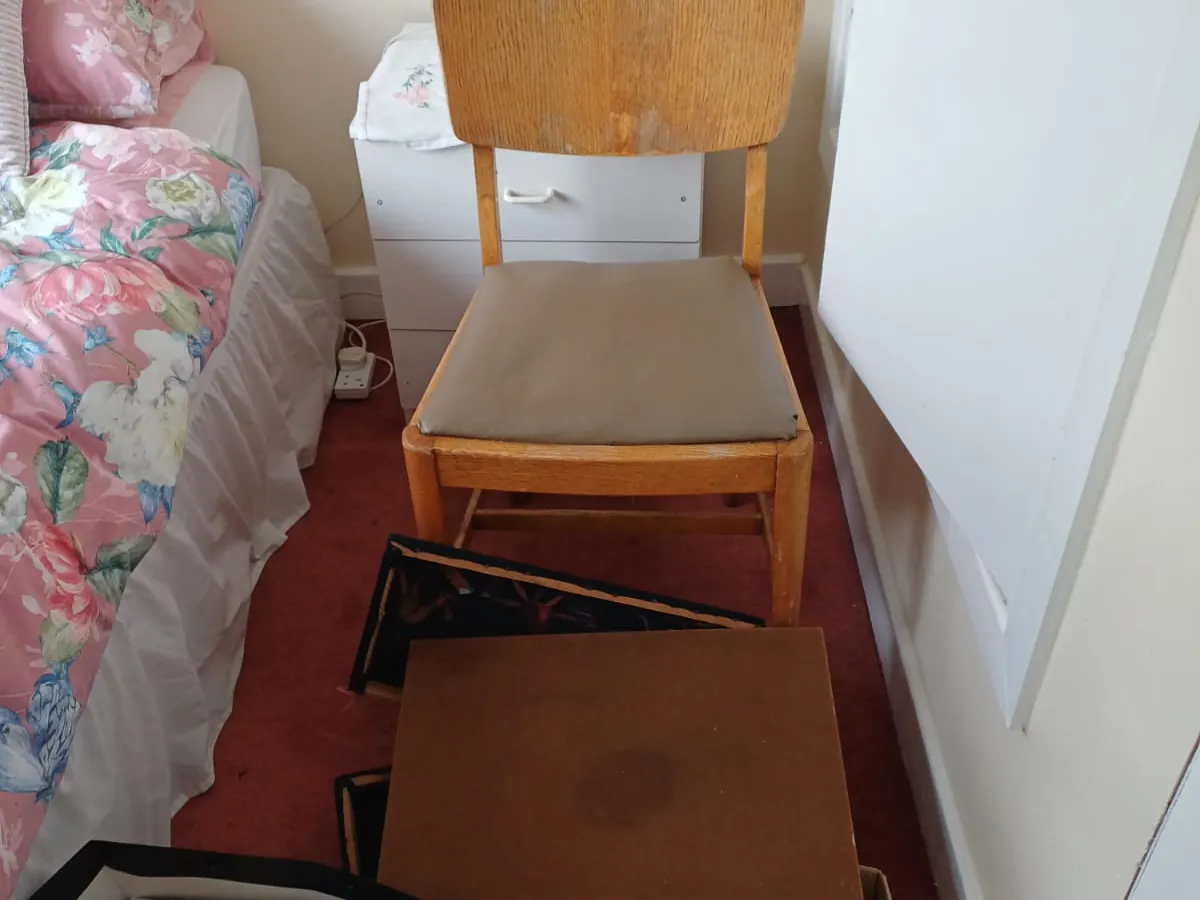
A home with a ward inside it
A long illness nursed at home changes a house. A front room becomes a bedroom because the stairs became impossible. A hospital bed arrives, then a pressure mattress, a hoist, a commode, a wheelchair, grab rails; the hall fills with boxes of pads and gloves, the fridge door with the carers’ rota. When it ends, the family is tired in a way a sudden death does not produce, and the house is full of things that were never theirs.
Clearing it has a natural order: the loaned equipment back to whoever owns it, the medication back to the pharmacy, the consumables sorted, and only then the ordinary clearance, whenever the family is ready. This is practical guidance from a clearance crew, not legal or medical advice: the solicitor leads on the estate, and the lender, whether the HSE or a supplier, is the authority on its own equipment. The three questions to settle before anything is moved are in our Clontarf guide.
Equipment on loan: what goes back, and to whom
Much of the equipment in a home where someone was nursed is on loan, from the HSE, from a hospice service, or from a private supplier, and it is wanted back. Loaned equipment often carries a label or asset tag with the lender’s name; where it does not, the nurse or care team who arranged it will know. Before any clearance, walk the house and make a list.
| Item | Usually | What to do |
|---|---|---|
| Hospital bed, pressure mattress and pump | On loan | Ring the lender to arrange collection; ask whether the mattress goes back with the bed |
| Hoist and slings | On loan | Ring the lender; keep the slings with the hoist |
| Wheelchair, walking frame, rollator, crutches | Loaned or bought | Check for a tag. Owned items that are sound are a reuse candidate |
| Commode, shower chair, raised toilet seat | Supplied, or bought | Ask whether the lender wants them back; if not, they go in the clearance |
| Oxygen concentrator and cylinders | The supplier’s property | Ask the supplier to collect. We do not accept gas cylinders in any quantity |
| Stairlift | Fixed to the stairs | Not part of an ordinary clearance; ask us before the day |
Our part is simple. Equipment on loan from the HSE or a supplier can be returned rather than disposed of: tell us what is on loan and from whom, and we arrange the return instead of loading it. Anything bought and not wanted goes in the clearance; a sound wheelchair or riser-recliner is set aside for reuse where there is a realistic second life, and a mattress that someone was nursed on is not reused.
Medication goes back to the pharmacy
A long illness leaves a lot of medication: blister packs, boxes of unopened tablets, liquid medicines, patches, creams, inhalers. All of it goes back to a pharmacy, and none of it goes in the bin, the clearance or the drain. Gather it into one bag from every room it has reached, usually the bedside locker, the kitchen, the fridge and the bathroom cabinet, before any crew arrives.
Sharps are different again. Needles, lancets, syringes and the sharps bin they were put in are clinical waste, which we do not accept in any quantity and which should not go in the household bin either. Ask the pharmacy or the care team about the route for the sharps bin.
Pads, gloves, dressings and the rest: what is simply waste
The boxes in the hall are the easiest part of the job and the one families worry about most. Unopened incontinence pads, bed protectors, gloves, wipes and dressings are ordinary household goods: ask the care team whether they can be passed on, and if not they go in the general load with everything else.
Anything that has been used is not part of a clearance: bag it and put it out with the household general waste bin before the day, as it was during the illness, or ask the care team about the route if there is a lot of it. We do not accept clinical waste, meaning sharps and anything from wound care or medical procedures; if we come across it on the day we leave it where it is and tell you.
The room that became the ward
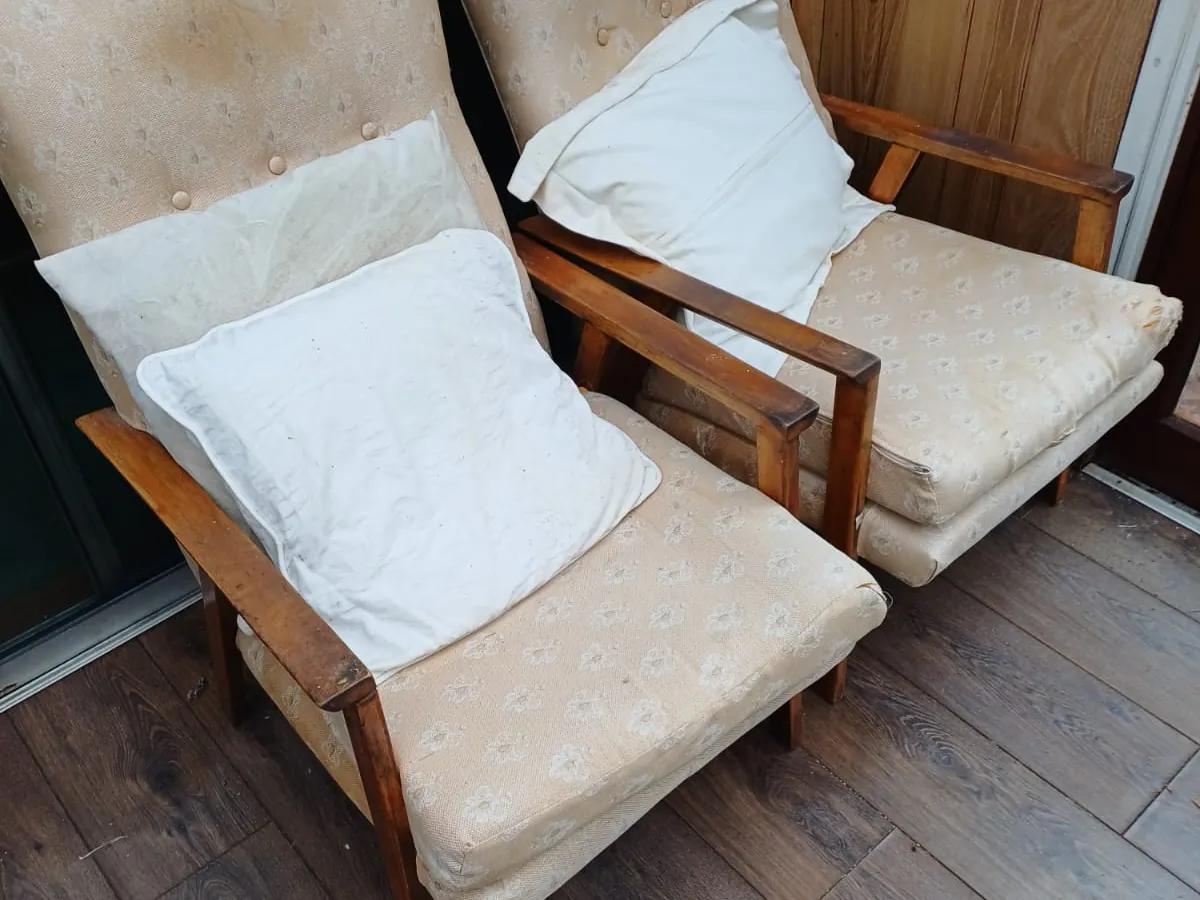
Once the bed has gone back, the room it stood in is the one the family wants dealt with first, or cannot face at all; either is fine, because we work in the order you choose. What is left after the equipment goes is ordinary: an armchair, a locker, a small table, a television. If the bed was the family’s own, its mattress goes as general waste. A riser-recliner or armchair in good condition is set aside for reuse where there is a realistic second life; a stained or worn one goes in the general load. Grab rails screwed to walls are fixed items and a loose ramp is not, so tell us which go and which stay.
The paperwork of a long illness, and the carer’s room
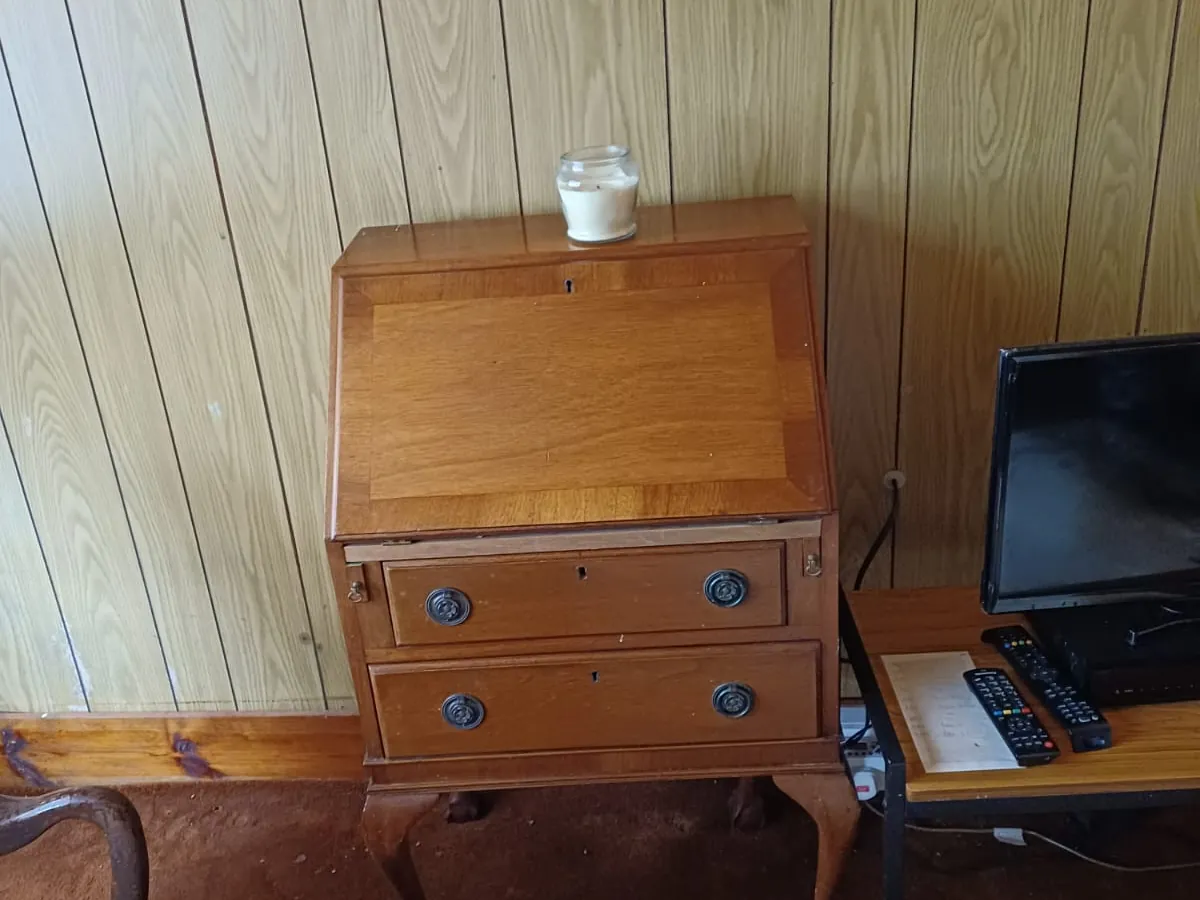
A long illness generates paper: hospital letters, prescriptions, the medication chart, care plans and visit notes, invoices from suppliers and agencies, often a diary a family member kept. The solicitor may want some of it, the agency may want its folders back, and some of it is simply the record of a hard time. Gather it before the clearance, in short sessions, with someone else; the bureau, the bedside locker and the kitchen drawer are the usual places. Papers, photographs and personal items we come across during the clearance are set aside and shown to you rather than removed; if we find them when you are not there, we stop and ring you.
If there was a live-in carer, their room is theirs until they have taken their belongings. Agree a collection date with the carer or the agency, keep the room out of the clearance until then, and tell us plainly that it is not to be touched. Anything a regular carer left, a uniform, a folder, a charger, goes in one bag with the agency’s name on it.
Then the ordinary clearance, at the family’s pace
With the equipment gone, the medication returned and the consumables sorted, what remains is a home like any other. Nothing says it must be cleared this month: tell the insurer the house is empty, ask the solicitor whether the contents can be cleared yet, and take the time the family needs. When you are ready, a photo of each room, the attic and the shed is enough for a fixed written price, and a crew of two or three with a box truck does the rest: top-down through the house, sorted on the truck for reuse, WEEE, paper, timber and textiles, swept through, photographed, keys back as agreed. Loads are held briefly in case something was missed.
The crew is briefed before a bereavement job, and nobody comments on anything, including on what the illness left behind. You set the order: the sickroom first, that room last, or the whole house in one go; staging over two or three visits costs a little more than one and we keep that fair. If the family does not agree about the contents, our Artane guide is about exactly that; if you are the executor, the Castleknock guide treats the house as a project. We work Monday to Saturday, 8am to 5pm, and not on Sundays.
Dublin City Council’s part, for the things you take yourselves
Coolock and Donaghmede are in the Dublin City Council area, and families often bring the books, clothes or small electricals to the council themselves. As we last checked:
The bulky household waste collection is for households in the city council area: book online through Citizen Hub or on 01 222 2222 and pay in advance, with the charge set per five items. Collection may take up to ten days after payment, you cannot choose the date, and the items must be on the public footpath on the morning; nothing is collected from inside the house. It takes furniture, bedding and mattresses among other things, and not electrical goods, batteries, paint or gas cylinders.
The Oscar Traynor Road bring centre in Coolock, Dublin 5, takes paper, cans, cardboard, plastics, textiles, batteries, glass, books, cooking and engine oil, and small electrical items no bigger than a microwave, all free, and bagged green waste for a charge paid in coins. It opens Monday to Thursday 9am to 4pm, Friday 9am to 1pm and Saturday 10am to 4pm, and takes no furniture, mattresses or general waste.
The recycling centres at Ballymun (Carton Way, Dublin 11) and North Strand (Shamrock Terrace, Dublin 1) take recyclables, household WEEE and batteries free, and charge per vehicle for bulky items, mattresses (two per load at most) and household hazardous waste such as paints and aerosols. Both close on Sundays, take householders’ own waste only, and refuse full large or commercial vans.
Our Clontarf guide covers the bulky collection in detail. Council opening days, charges and rules change. The details here are as we last checked them, October 2026 (council data checked on 6 October 2026), so confirm with the council or the centre before you travel.
What we do not accept
What we do not accept. We do not accept paint, solvents, oils, fuel, chemicals or gas cylinders, in any quantity, and we do not accept asbestos or clinical waste. We cannot make an exception on the day, so set these aside, tell us about them when you ask for a quote, and use the council route described in this guide.
In a house where someone was nursed that usually means the oxygen cylinder, which goes back to the supplier, and the sharps bin, which is clinical waste.
What affects the quote
We do not publish prices. A quote follows the volume, the weight, access, the mix of items and how much can be reused, and whether the work is staged over several visits; loaned equipment that is going back is not part of the load. Send photos of each room, the attic and the shed, with a note of what is staying and what is on loan, for a fixed price in writing. For the general guide, read our bereavement clearance guide for Dublin.
Questions families in Coolock and Donaghmede ask
Who takes back the hospital bed and the hoist?
Whoever lent them: the HSE, a hospice or hospital service, or a private supplier. Look for a label or asset tag, or ask the care team. If you prefer, tell us what is on loan and from whom and we arrange the return rather than loading it.
Can you take a wheelchair or a walking frame the family bought themselves?
Yes. Tell us it was bought rather than loaned. Sound mobility aids are set aside for reuse where there is a realistic second life; we do not promise a destination for a particular item.
What should we do with the medication?
Gather all of it, from every room, and bring it back to a pharmacy before the clearance. None of it goes in the bin, the drain or the clearance. Sharps and the sharps bin are clinical waste, which we do not accept; ask the pharmacy or the care team about the route.
Do you take unopened incontinence pads and other supplies?
Yes. Unopened pads, protectors, gloves, wipes and dressings are ordinary household goods and go in the general load if nobody can use them. Anything used is not part of a clearance and goes out with the household bin before the day.
Can the oxygen cylinder go on the truck with everything else?
No. We do not accept gas cylinders in any quantity. Oxygen cylinders and concentrators are usually the supplier’s property, so ask the supplier to collect them before the clearance.
Can the mattress from the hospital bed be reused?
No. If the bed was on loan, ask the lender whether the mattress goes back with it. If it was the family’s own, it goes as general waste; a mattress that someone was nursed on is not reused.
There was a live-in carer. What happens to their room?
It stays theirs until they have collected their belongings. Agree a date with the carer or the agency, keep the room out of the clearance until then, and tell us it is not to be touched.
Do we have to clear the house straight away?
No. Tell the insurer the house is empty, ask the solicitor whether the contents can be cleared yet, and take the time the family needs. We do not promise a date until the job is agreed, and there is no deadline on our side.
Can you clear just the room where our mother was nursed and leave the rest until later?
Yes. Many families want that room dealt with first and the rest in a later visit, or the reverse. Staging over two or three visits costs a little more than one and we keep that fair.
Will the crew know what happened in the house?
They are briefed before every bereavement job and nobody comments on anything. We walk the house with you first, in person or on a video call, and work in the order you choose.
What our customers say
Genuine reviews of our clearance crew on Google, quoted as written; dates as shown on Google in October 2026.
★★★★★5 months agoWe got Ciprian in to do a bereavement house clearance and I couldn't recommend him higher. They made what was really a difficult experience for us so much easier and Ciprian was a gentleman throughout and very understanding of what we were going through. Also it was very refreshing these days to see someone operating his business in a very transparent and honest way and the job they did was top class and left the house spotless afterwards.
★★★★★3 months agoExcellent service clearing a full house following a bereavement. Ciprian and crew were professional, highly efficient with good communication and completed the job within two days as promised. Their fees were very reasonable and there were no hidden charges. Did exactly as they were asked to do with honesty and integrity. Would highly recommend.
Ready to get a price?
The service this guide supports is Bereavement clearance Dublin, with the areas we cover and the local council facts. Or skip straight to a quote.
Related pages
- Bereavement clearance guide (Dublin)
- Bereavement clearance in Castleknock: an executor’s plan
- House clearance Dublin
- Mattress disposal Dublin
- Furniture removal Dublin
- Bereavement clearance in Artane: a home lived in for fifty yearsClearing a parent’s Artane home after fifty years: the layers of belongings, the attic and shed, papers and valuables, and staging it when siblings disagree.
- Bereavement clearance in Clontarf: a practical guideClearing a family home in Clontarf after a death: what to do first, how to sort, Dublin City Council’s €50 bulky collection and its limits, and how a clearance day runs.
- House clearance in Raheny before you sellClearing a Raheny house before putting it on the market: empty or furnished, the order of clearance, repairs and cleaning, fixtures, and the Dublin City Council recycling facts.